
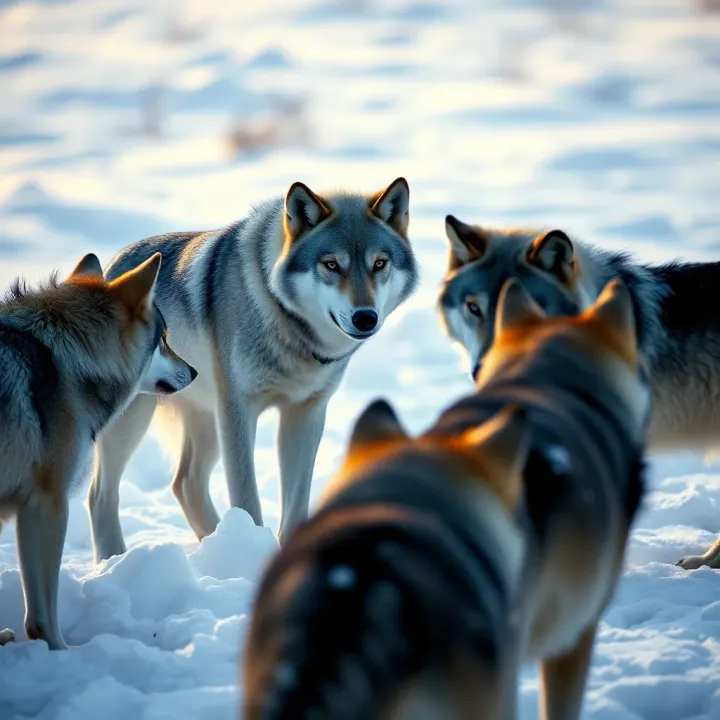
Wolf Winners: How Dominant Wolves Shape Their Packs
🐺 Explore wolf winners—dominant wolves shaping pack life, survival strategies, and their key role in ecosystems. Bust myths and understand their true impact.
Edited By
Thomas Walker
The Wolf Prize ranks among the top international awards recognising excellence in science, arts, medicine, and agriculture. Launched in 1978 by the Wolf Foundation, this award cushions winners who have made solid contributions driving progress and innovation across their disciplines.
Unlike prizes limited by nationality or professional group, the Wolf Prize often picks out individuals whose work has ripple effects worldwide. It especially shines a light on research and creative work that might not get fussier recognition elsewhere, yet holds real-world significance.

Notable recipients include scientists whose discoveries have reshaped understanding of biology or physics, medical experts pioneering treatments saving lives, artists influencing culture, and agricultural innovators improving food security. For example, mathematicians who later won Fields Medals, or medical researchers embarking on breakthroughs in cancer therapy.
The prize comprises a certificate, a medal, and a cash reward, drawing nominees from across the globe and judged by international committees of specialists. This rigorous selection process ensures awarded work genuinely advances knowledge or practice.
For gamblers, casino managers, and gaming consultants, understanding such high-calibre achievements hints at how innovation in any field fuels broader development. The meticulous evaluation behind the Wolf Prize can offer parallels to scrutinising risks, innovations, and trends in gaming markets.
The Wolf Prize not only honours exceptional achievements but also showcases the global impact of dedicated research and creativity across diverse fields.
This article will walk through some standout winners and their breakthroughs, shedding light on how their efforts continue to influence industries and society at large.
Understanding the history and purpose of the Wolf Prize is vital for grasping its significance in recognising pioneering contributions across several key fields. The prize serves not only as an accolade but also as a beacon that highlights innovation and excellence in areas crucial to global progress.
The Wolf Prize was established in 1978 by the Wolf Foundation, founded by Ricardo Wolf, a German-born inventor and diplomat who settled in Israel. His vision was to promote science and art for humanity’s benefit. The Foundation’s approach was practical — to reward achievements that might otherwise be overlooked by traditional awards like the Nobel Prize. For instance, mathematicians rarely receive Nobel honours, yet the Wolf Prize fills that gap effectively.
By recognising a diverse set of disciplines, the foundation emphasises the broad spectrum of human endeavour. This is significant for readers aiming to understand how international prizes can influence various professional communities and research directions.
The core aim of the Wolf Prize is to celebrate outstanding achievements that contribute meaningfully to knowledge and culture worldwide. It encourages ongoing development in under-recognised but highly impactful fields. For example, the prize often highlights work in agriculture, crucial for food security — an issue of growing concern.
Practically, the prize draws global attention to deserving scientists, artists, and farmers, boosting their profiles and opening doors for further funding and collaboration. For industries such as gaming and analytics, it shows how recognition in seemingly unrelated areas can inspire innovation in technology, data science, and creative thinking.
The prize covers fundamental sciences like physics, chemistry, and mathematics, alongside medicine. This broad approach ensures inclusive support for discoveries ranging from quantum physics to novel medical treatments. Take, for example, winners who’ve advanced cancer research — their breakthroughs affect healthcare systems globally, including access and quality.
For professionals dealing with data or predictive models—common in gaming analytics—understanding these scientific advances provides context on how complex problems get solved. The Wolf Prize spotlights the methods and insights that drive meaningful change.
The arts category encompasses disciplines such as painting, sculpture, music, and performance, recognising creative excellence that shapes cultural identity. Winners here often bring fresh perspectives, pushing stylistic or thematic boundaries that resonate internationally.
Agriculture, meanwhile, honours innovations in crop science and sustainable practices. This has practical importance given shifting climate conditions and the demand for more efficient farming. For example, prize recipients have developed drought-resistant crop varieties, offering models for adaptation that might be useful across various food supply chains.
The Wolf Prize’s diverse categories remind us that fostering excellence isn’t limited to laboratories; it extends to studios, fields, and hospitals alike, reflecting the interconnectedness of human endeavour.
These categories together point to the prize's comprehensive nature in recognising both intellectual and cultural progress, reinforcing its role as a catalyst for global innovation and improvement.
The selection process for the Wolf Prize winners is both rigorous and transparent, designed to identify individuals who have made significant contributions to their fields. Understanding the criteria and process behind the award lends credibility to its recipients and highlights why the prize holds such esteem in scientific, artistic, and agricultural communities.
Nominations for the Wolf Prize come exclusively from established experts within the relevant disciplines. This typically includes members of national academies, senior academics, and past laureates, ensuring that only those with thorough knowledge of the field put forward candidates. For example, in science categories, leading university professors or renowned researchers familiar with cutting-edge developments often nominate peers whose work has had a clear impact.
This selective nomination process helps maintain the prize's high standards by filtering candidates through the lens of professionals who understand the significance of contributions in detail, rather than relying on public or open applications.

Once nominations arrive, expert committees comprising international specialists review each candidate’s achievements carefully. These panels evaluate not just the technical merit but also the originality and practical influence of each nominee's work. For instance, in medicine, committees assess breakthroughs that have advanced patient care or opened new research pathways.
This thorough assessment ensures that winners are chosen based on objective excellence rather than popularity or fame. It also fosters trust within the community that the award reflects genuine accomplishment, thereby encouraging nominees to strive for impactful innovation.
The Wolf Prize is presented during an official ceremony hosted by the Wolf Foundation, usually in Israel. This event gathers laureates, academics, and public figures, providing a platform to honour recipients in front of peers and the public. For example, the ceremony often highlights their specific contributions through speeches and presentations, giving attendees a clear understanding of why each winner deserves the accolade.
Such recognition not only celebrates individual success but also inspires other researchers and artists by showcasing impactful achievements in a high-profile setting.
Receiving the Wolf Prize typically boosts a winner's profile in both academic circles and the wider public. Media coverage and scholarly discussion often follow, spreading awareness of their work’s importance. For instance, a physicist awarded the prize might see increased invitations to deliver talks or collaborate internationally.
This attention helps accelerate further research and funding opportunities, showing how the prize extends beyond the ceremony itself to actively support ongoing progress in diverse fields.
The Wolf Prize’s stringent criteria and respected selection process make it a true mark of excellence, significantly benefiting both recipients and their disciplines through public honour and increased opportunities.
The Wolf Prize has celebrated researchers whose work has truly shaken up science and medicine, highlighting breakthroughs that ripple out far beyond academic circles. These winners aren't just brilliant on paper — their discoveries have practical relevance that often alters how industries function or accelerate new tech. Understanding who these trailblazers are and what they've contributed matters for anyone interested in the progress behind today's innovations.
Physicists recognised by the Wolf Prize often crack problems that redefine our grasp of the universe at a fundamental level. For example, recipients who unravelled particle physics paved the way for technologies such as medical imaging equipment, including PET scanners. Their research in quantum mechanics and cosmology also influences sectors like telecommunications and computing.
One standout winner, for instance, helped develop theoretical models that improved our understanding of superconductivity. While abstract, this paved the path for more efficient energy transmission systems, vital for power companies looking to cut losses and boost green energy adoption. So the work isn't just eggheads scribbling equations; it feeds into innovations touching everyday life.
Chemistry winners bring breakthroughs that tend to have immediate, tangible impact. Think of catalysts improving industrial processes or novel materials leading to stronger, lighter components used in anything from cars to electronics. Australian chemist Richard Schrock, who received the prize for his work in catalysis, has indirectly enabled cheaper and cleaner plastic production methods that reduce environmental fallout.
The practical side of chemistry prizes often crosses over into environmental tech and pharmaceuticals, holding promise for sustainable manufacturing and new drug development. When Wolf Prize winners uncover molecules or processes that shave costs and boost efficiency, it's good news for industries aiming for both profit and responsibility.
Medical winners are usually those who push forward treatments or diagnostics fundamentally transforming healthcare outcomes. Take Craig Venter whose advancements in genetic sequencing (though not a Wolf Prize recipient) parallel the kind of work celebrated by the prize; similarly, Wolf Prize honourees have pioneered cancer therapies or vaccine development that directly save lives.
These innovations aren't confined to labs but ripple through clinical practice worldwide. Papers turn into protocols, improving care and making diseases more manageable or even preventable. By spotlighting such breakthroughs, the Wolf Prize helps promote medical science that serves the community, arguably one of the most impactful domains of human knowledge.
One striking feature of Wolf Prize recipients is their international mix. Winners hail from a variety of countries, reflecting science and medicine as global endeavours. This diversity is more than symbolic; it suggests a melting pot of ideas and approaches that enrich research quality.
For example, recipients from smaller or less traditionally dominant countries in science have introduced perspectives that sparked fresh insights or challenged established norms. This international tapestry helps foster collaborations cutting across borders, crucial in today's interconnected world facing challenges like pandemics or climate change mitigation.
Another pattern is that some researchers have been honoured more than once or recognised by multiple prestigious awards, including the Wolf Prize. This repeated recognition usually signals sustained, high-impact contributions over years or decades.
Repeated accolades can also inspire younger scientists by showing that groundbreaking work often isn't a one-off but the outcome of persistent effort. For those in industries relying on ongoing innovation, like gaming tech or medical devices, this illustrates the value of sticking with tough problems and continuous improvement.
In short, the Wolf Prize winners in science and medicine represent a diverse, persistent group whose discoveries have practical effects felt far outside academic circles — shaping technologies, health, and even the environment across the globe.
The Wolf Prize recognises outstanding achievements not only in scientific fields but also in the arts and agriculture, highlighting contributions that shape culture and food security globally. Award winners in these categories demonstrate how creativity and innovation go hand in hand, offering practical benefits that impact everyday life. Their work often challenges conventional thinking, sparks new movements, or introduces sustainable methods that farmers and communities can adopt.
Artists honoured with the Wolf Prize in visual arts have often pushed boundaries within mediums like painting, sculpture, and new media. Their works influence not just aesthetics but also social perspectives, reflecting or critiquing societal changes. For example, Anish Kapoor's sculptures, recognised by the prize, blend form and space in ways that invite viewers to reconsider physical and emotional boundaries—a valuable lesson for designers and creatives alike.
Beyond gallery walls, these artists inspire practical applications in fields like architecture, advertising, and public art. Their innovative use of materials and techniques often filters down, encouraging new approaches in urban development and community projects that seek to enhance public spaces.
Wolf Prize recipients in music and performance often blend tradition with innovation, reaching audiences globally through compositions, conducting, or performance art. Take Pierre Boulez, whose work in modern music shaped contemporary classical compositions, influencing how music is taught and performed worldwide.
Their achievements matter to those in entertainment and event management, showing how fresh programming and diverse artistic expressions can attract and retain wide audiences. Winners exemplify the power of performance to connect people, build cultural identity, and promote creative economies.
Agricultural Wolf Prize winners are often recognised for breakthroughs that increase crop yields, disease resistance, or nutrient value. For instance, scientists developing drought-resistant wheat varieties have helped farmers in arid regions maintain productivity despite climate challenges. Such innovations directly support food security and economic stability, crucial for both rural communities and global markets.
Their research introduces new crop management techniques and genetic advancements with practical outcomes, such as reduced pesticide use or enhanced soil health. These benefits often translate to lower costs and higher-quality produce for the supply chain.
Sustainability is at the heart of many agricultural prize winners' work. Their contributions include developing farming systems that balance productivity with environmental care. Methods like crop rotation, integrated pest management, and water-saving irrigation have been refined to suit different ecosystems and farming scales.
By promoting these practices, winners help reduce the ecological footprint of farming, preserving biodiversity and soil fertility over time. Their work is especially relevant for policymakers and farmers aiming to meet rising food demands without compromising future resources.
Wolf Prize winners in arts and agriculture provide tangible examples of how cultural and scientific excellence drive meaningful change, offering lessons applicable across industries and communities worldwide.
The Wolf Prize has become a significant force in recognising groundbreaking achievements across several fields, boosting global innovation and research. Beyond the prestige of winning, the prize actively shapes the landscape by highlighting outstanding work that pushes boundaries and benefits society. Its influence stretches from raising awareness to inspiring future talent, creating ripple effects within the scientific, artistic, and agricultural communities.
Winning the Wolf Prize often leads to a considerable boost in a recipient's international profile. For instance, distinguished winners in physics like Stephen Hawking gained not only recognition but also increased opportunities for collaboration and funding. This recognition helps recipients get their work noticed beyond national borders, encouraging institutions and policymakers to support their initiatives. The prize acts as a stamp of quality that opens doors to global platforms, granting winners a louder voice in their respective fields.
This wider exposure can accelerate the dissemination of innovative ideas and technologies. For example, research that revolutionised solar energy got more traction globally after the prize spotlighted its innovators. In a competitive research environment, this kind of visibility is invaluable; it can secure grants or partnerships that propel projects from concept to practical use.
A key benefit of the Wolf Prize is its role in motivating younger scholars keen on making their mark. Many up-and-coming researchers see winners as role models, which fosters ambition and persistence in their own work. When a scientist or artist receives the prize, their story often highlights years of hard work and dedication, breaking the myth that success is immediate.
Institutions also use the prize as a benchmark to encourage young talent. Universities may promote involvement in projects aligning with prize-winning research or artistic styles, which helps cultivate an environment where excellence is sought after and rewarded. This can lead to a culture that values innovation and resilience long before researchers reach international acclaim.
Recent Wolf Prize winners reveal some shifts aligned with global challenges and technological advances. For example, in agriculture, winners have increasingly focused on sustainable practices and climate-resilient crops, reflecting urgent worldwide concerns. Similarly, in medicine, there's been a noticeable lean towards genetics and personalised treatment strategies.
These trends show the prize's responsiveness to evolving fields and urgent needs, signalling to the global community where attention and resources might be best directed. It also highlights areas where innovation is most likely to produce meaningful change, guiding both funders and researchers.
The Wolf Prize plays a quiet but effective role in building and nurturing communities within science and the arts. By recognising collaborative projects and interdisciplinary approaches, it encourages experts to cross traditional boundaries. For instance, prize-winning maths and physics research often involves partnerships across continents, fostering networks that outlast the award itself.
In the arts, winners often set new creative directions or revive neglected forms, influencing peers and younger practitioners. This collective momentum can help reshape standards and expectations within arts communities, prompting fresh exploration and innovation.
By highlighting excellence and emerging trends, the Wolf Prize doesn't just reward achievement—it steers the course of research and creativity worldwide.
In sum, the Wolf Prize continues to impact global innovation by spotlighting trailblazers, encouraging fresh talent, and reflecting shifts in priority areas. Its influence extends beyond the winners, shaping the environments where the next breakthroughs and creative expressions will emerge.
🐺 Explore wolf winners—dominant wolves shaping pack life, survival strategies, and their key role in ecosystems. Bust myths and understand their true impact.

Explore Hilary Mantel's 'Wolf Hall' 📚, its rich history, themes, and why it clinched the Man Booker Prize 🏆, changing the face of literature forever.

🎬 Explore how Oscar winners from The Wolf of Wall Street shaped their careers and made their mark at the Academy Awards, leaving a lasting impact on film history.

🏆 Martin Wolf announces the Political Economy Club Essay Prize winners, revealing fresh insights, judging details, and the event's impact on political economy.
Based on 9 reviews